Transformation of Meaning in Literary Translation: Polysemy in Shakespeare and Deliberate Indeterminacy in Kafka
Literary translation can be understood not only as the transfer of meaning from one language to another, but also as a way of reflecting on how meaning itself is formed. In literary texts, meaning is rarely limited to clearly defined concepts carried by individual words. Instead, it often emerges through unfinished thoughts, ambiguity, silence, rhythm, and hesitation. For this reason, literary translation cannot be evaluated solely in terms of technical accuracy. The interpretation of meaning, particularly what is left unsaid or unresolved, plays a crucial role. Both William Shakespeare and Franz Kafka construct meaning through forms of uncertainty, yet they do so in different ways.
Shakespeare’s language frequently relies on polysemy, the coexistence of multiple meanings within a single word or phrase. Kafka, by contrast, often employs deliberate indeterminacy, intentionally withholding specification in order to resist fixed interpretation. When translated, these two strategies present distinct but related challenges.
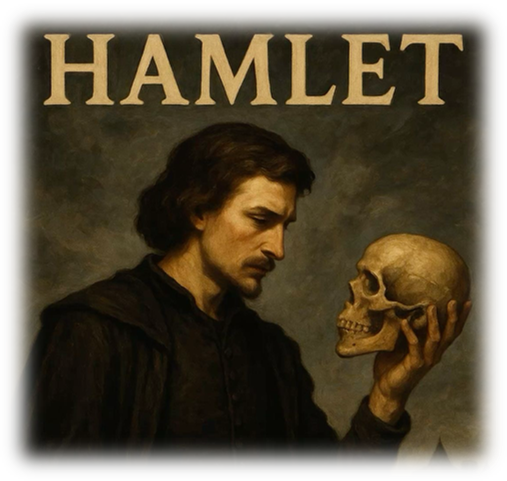
Shakespeare’s plays are linguistically dense and marked by extensive wordplay. Many of his key expressions carry several meanings at once, allowing language to operate on philosophical, emotional, and social levels simultaneously. While this multiplicity contributes to the richness and playfulness of the plays, it can also pose difficulties for translators. A well-known example is Hamlet’s line “to be or not to be.” In many languages, this phrase is translated almost literally. However, in Early Modern English, “to be” does not refer solely to existence. It also invokes questions of moral responsibility, social role, and the pressure to act within a given order. In translation, it may therefore be tempting to clarify or narrow these possibilities to guide the reader toward a more stable interpretation. Such choices are often made thoughtfully and with the target audience in mind. At the same time, they may shift the focus of the line, encouraging reflection on one aspect of meaning while leaving others less accessible. In this sense, what changes is not necessarily the meaning itself, but the range of interpretive possibilities available to the reader.
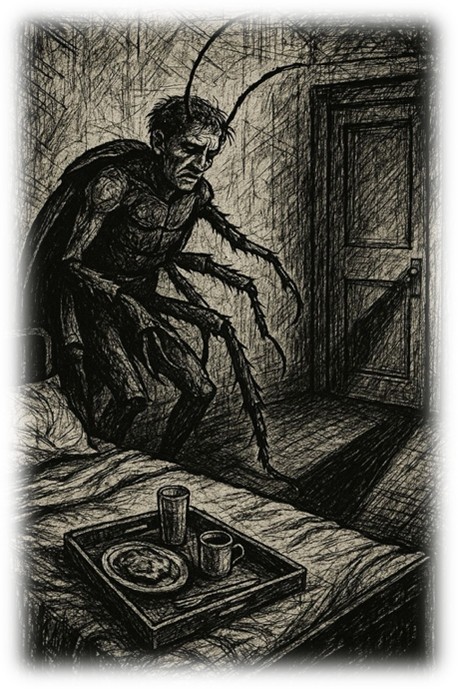
Kafka’s The Metamorphosis offers a different but equally revealing example. The German word Ungeziefer, used to describe Gregor Samsa’s transformation, refers to a repulsive creature without specifying its type. Kafka appears less concerned with zoological precision than with the social and existential exclusion of an individual from the human community. The term’s vagueness is deliberate, leaving the nature of the transformation unsettlingly undefined. In translation, however, Ungeziefer is often rendered as a more specific creature. In various languages, Gregor is described as a cockroach, an insect, or a parasite. While these choices are understandable and linguistically motivated, they also introduce a degree of concreteness that was absent in the original. Kafka famously resisted visual or explicit representations of the creature, suggesting that naming itself might limit the philosophical resonance of the text. As a result, some translations may direct readers’ attention more strongly toward the physical transformation, while the existential ambiguity recedes into the background.
When considered together, Shakespeare and Kafka reveal a recurring pattern in literary translation. Meaning is not necessarily reduced through error or misunderstanding, but sometimes through explanation. In Shakespeare, polysemy invites translators to choose among multiple meanings; in Kafka, deliberate indeterminacy challenges them to preserve uncertainty itself. In both cases, translation decisions, often made to enhance clarity or readability, may subtly reduce the openness of the text. This observation invites a reconsideration of the familiar notion of being “lost in translation.” What tends to disappear is not the message, but its ambiguity. Translation often stabilizes what was fluid, defines what was intentionally vague, and completes what was deliberately left unfinished. Walter Benjamin’s idea of translation as the “afterlife” of a text is particularly relevant here. Each translation allows a work to continue in a new language, yet this continuation inevitably involves transformation. From this perspective, literary translation may be better understood as re creation rather than replication. The translator’s task is not simply to select equivalent words, but to decide how much uncertainty should remain. In literature, meaning frequently resides in what is only partially articulated. A translation that preserves this indeterminacy may appear less transparent, but it remains closer to the intellectual and aesthetic freedom of the original.
References
- Kafka, F. (2009). The Metamorphosis (S. Corngold, Trans.). New York: W. W. Norton & Company.
- Venuti, L. (1995). The Translator’s Invisibility: A History of Translation. London: Routledge. https://www.beyazperde.com/filmler/film-3446/
Visual References
- Unknown artist. (n.d.). Illustration of Gregor Samsa in Franz Kafka’s “The Metamorphosis” [Illustration]. Pinterest.
- Unknown artist. (n.d.). Hamlet holding Yorick’s skull illustration [Book cover illustration]. Pinterest.
AI Use
- Language editing and image generation.