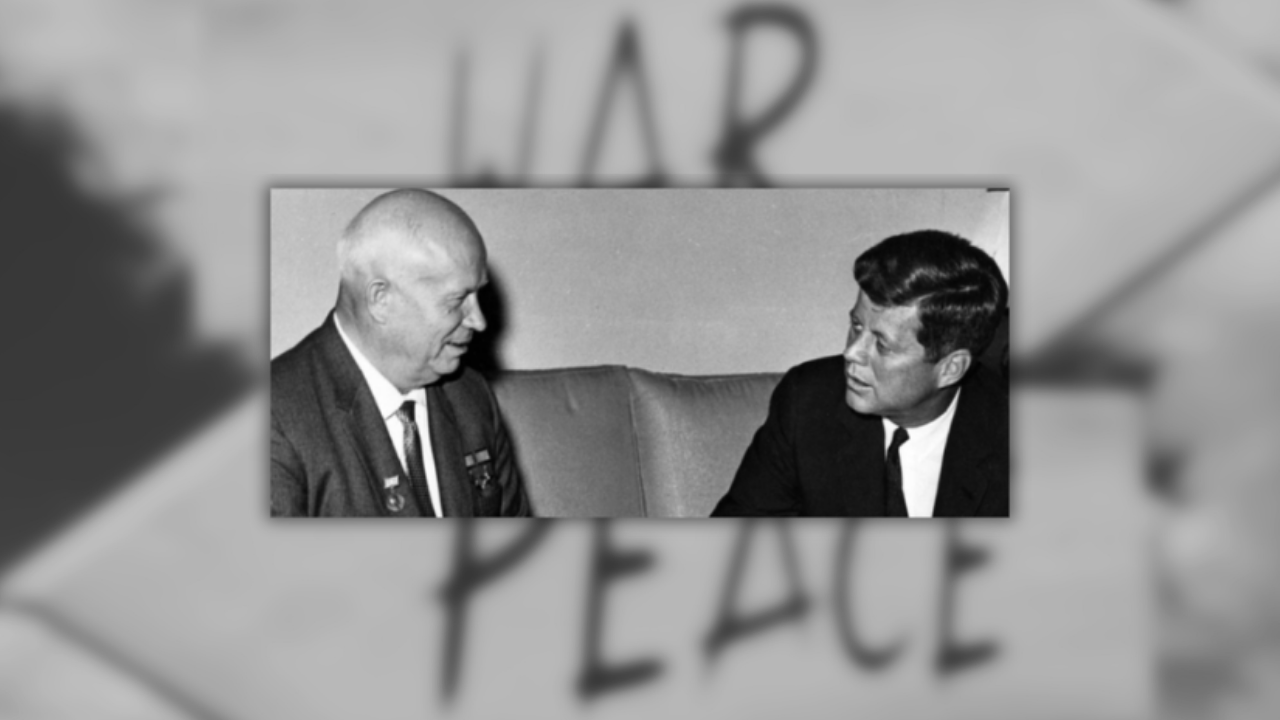
Lost in Translation, Lost in Peace: Khrushchev’s Phrase and Its Cold War Legacy
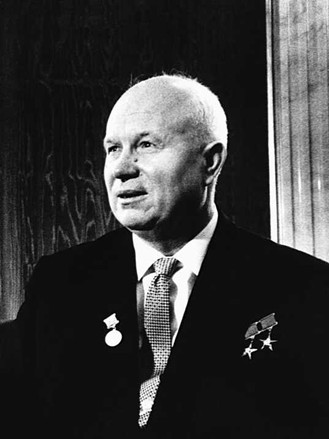
On November 18, 1956, Soviet Premier Nikita Khrushchev addressed Western ambassadors at a reception in Moscow. During this speech, he declared the now-infamous words “Мы вас похороним!” (transliterated My vas pokhoronim!), which were rendered in English as “We will bury you.” For decades, this line has been cited as one of the most notorious translation moments in Cold War history. But what did Khrushchev really mean, and why do translation scholars continue to analyze this incident?
A Cold War Soundbite That Echoed Around the World
At the time, the phrase appeared in Western newspapers as a direct threat. The New York Times and other outlets reported Khrushchev’s words on their front pages, framing them as evidence of Soviet aggression. Western diplomats at the event briefly walked out in protest, interpreting the line as an explicit warning of hostility.
However, the original phrase and its context differ significantly from how it was received. The full remark included, “Whether you like it or not, history is on our side…” immediately preceding “We will bury you.” In essence, Khrushchev was invoking the Marxist view of historical development, the belief that capitalism’s internal contradictions would inevitably lead to its downfall and that socialism would supplant it.
Literal Translation vs. Contextual Meaning
The English translation “We will bury you” reflects a literal rendering of the Russian phrase. Such a translation is accurate at the level of individual word; sпохороним does correspond to “bury.” Yet translation is rarely only about literal equivalence. Many scholars argue that the phrase, especially in a diplomatic context, should have been translated with attention to contextual and cultural nuances. Suggested alternatives include translations like “We will outlast you,” “We shall be present at your funeral,” or “We will live long enough to see you buried,” each of which highlights the metaphorical meaning rather than a direct threat of violence.
This divergence between literal and contextual translation lies at the heart of why the episode remains influential in translation studies. A translator who focuses solely on lexical equivalence may faithfully convert the surface structure but lose the intentio operis; the intention behind the utterance, which in diplomatic language is often politically and culturally loaded.
The Interpreter’s Role
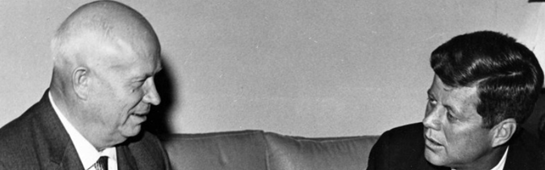
Khrushchev’s remark was translated into English live by his interpreter, Viktor Sukhodrev, a highly respected Soviet translator whose career spanned many high-level diplomatic encounters. Sukhodrev later became known as one of the most significant interpreters of the Cold War era, translating for leaders including Khrushchev, Brezhnev, and Gorbachev.
While literal translation was common practice among interpreters at the time, modern perspectives emphasize that successful interpretation in diplomatic contexts must consider rhetorical function, ideological frameworks, and cultural perception. Khrushchev’s phrase, in Russian idiom, expresses ideological competition and eventual historical supremacy rather than violent confrontation. Failing to convey this nuance led many Western listeners to interpret the statement as a nuclear threat, a misperception that resonated with the era’s anxieties and contributed to the public fear of escalating tensions.
Translation’s Consequences in Diplomacy
The Khrushchev case illustrates a core lesson in translation criticism: translation is not a neutral act. In international relations, translators and interpreters do far more than convert words; they act as mediators of meaning. When the mediator’s choices obscure ideological or contextual content, the results can be far more consequential than humor or embarrassment; they can shape perceptions of threat, trust, and policy.
Diplomatic miscommunications, whether from ambiguous phrasing or lack of cultural awareness, have been documented as shaping the course of conflicts and negotiations throughout history. Khrushchev’s statement is frequently cited in studies of translation and diplomacy as a case where interpretive choices influenced the trajectory of international discourse. Contemporary research highlights how such errors, even if unintentional, can reinforce stereotypes, escalate tensions, and create barriers to mutual understanding.
Beyond Khrushchev: Broader Implications for Translation Studies
This episode remains a staple in translation studies curricula because it encapsulates several key issues:
-Literal versus idiomatic translation: A word-for-word rendering can mislead if the target audience lacks familiarity with source culture idioms.
-Contextual sensitivity: Translators must understand the broader communicative situation, the historical moment, the intended audience, and the ideological subtext.
- Interpreter influence: The interpreter’s role is dialogic, not mechanical; their choices affect how messages are received and interpreted.
In diplomatic settings, where every utterance is scrutinized for intent, the stakes of translation increase dramatically. This case demonstrates that translation errors are not merely linguistic curiosities but can have geopolitical consequences. As recent scholarship argues, insights from Cold War misinterpretations remain relevant for modern diplomatic mediation, where linguistic precision and cultural awareness are crucial for reducing misunderstandings in international affairs.
Conclusion
Khrushchev’s “We will bury you” is more than a historical anecdote; it is a cautionary tale for translators and interpreters. It reminds us that translation involves interpreting not just language, but meaning, culture, and political context. In a world where words can escalate conflicts as much as weapons, translation studies must advocate for interpretive awareness, cultural literacy, and ethical responsibility.
When a single phrase can be read as either ideological rhetoric or nuclear threat, the translator’s role becomes pivotal, marking the difference between clarity and calamity in international discourse.
“Translation is not a matter of words only: it is a matter of making intelligible a whole culture”
(Burgess, as cited in Responsive Translation, n.d.).
References
- Bureau Works. (n.d.). The top 6 worst translation mistakes in history. Into23. (2022, January 12). History lesson: Why is right translation important. https://into23.com/blog/words-that-altered-history-translation-blunders-in-international-relations/ Into23
-Idiomatic. (n.d.). The misinterpretation that nearly sparked World War III. https://www.idiomatic.net/blog/translation/the-misinterpretation-that-nearly-spawned-world-war-iii idiomatic.net
- IMD Translation. (2025, May 29). Diplomatic missteps: When leaders are lost in translation. https://imdtranslation.co.uk/diplomatic-missteps-when-leaders-are-lost-in translation/ IMD Translation Ltd
- LangPros. (n.d.). 7 costly translation mistakes & how to avoid them. https://www.langpros.net/7-costly-translation-mistakes-how-to-avoid-them/ Langpros Language Solutions Dubai
- Prime Production Ltd. (2025, April 8). 7 famous interpretation or translation blunders in history. https://primeproductionltd.com/7-famous-interpretation-or-translation blunders-in-history/ Prime Production
- Responsive Translation. (n.d.). Great quotes about translation. Retrieved January 4, 2026, from https://www.responsivetranslation.com/blog/great-quotes-about translation/ (“Translation is not a matter of words only”, Burgess quote)
- Signewords. (n.d.). Translation errors causing trouble. https://signewords.com/blog/little-translation-errors-that-can-cause-big-problems/ SIGNEWORDS
- SiteTran. (2025, June 18). Infamous mistranslations that shook the world. https://www.sitetran.com/blog/localization-for-growth/infamous-mistranslations-that-shook-the world SiteTran
- Temirbayev, D. (2025). The impact of translation and interpretation errors on Cold War diplomacy: Lessons for modern-day language mediation (Preprint). ResearchGate. https://www.researchgate.net/publication/390852799_Report_-_The_Impact_of_Translation_and_Interpretation_Errors_on_Cold_War_Diplomacy_Lessons_for_Modern Day_Language_Mediation ResearchGate
Visual References
- (Instagram. (2025, January 5). [Photograph, image post] [Instagram post]. Instagram. https://www.instagram.com/p/C7wM6FGv3nu/
- (Khrushchev, N. (n.d.). In Wikipedia. Retrieved December 31, 2025, from https://en.wikipedia.org/wiki/Nikita_Khrushchev)